Independent games publisher Versus Evil and developer Obsidian Entertainment today announced that Pillars of Eternity II: Deadfire - Ultimate Edition is now available on Xbox One and PlayStation 4, with a Nintendo Switch version following later in the year. Originally released for PC and Mac, Deadfire received universal critical acclaim and picked up numerous awards.
Priced at $59.99, Pillars of Eternity II: Deadfire - Ultimate Edition features all the major updates and expansions available for the PC version made up of Beast of Winter, Seeker, Slayer, Survivor and Forgotten Sanctum.
With an enormous open world to explore and comprehensive cast of characters, Pillars of Eternity II: Deadfire - Ultimate Edition builds on the foundation of classic tabletop gameplay more than ever before, providing players with a deeper single player RPG game experience with either Turn-Based Mode or Classic Real-Time with Pause.
Players on PlayStation 4 and Xbox One can now experience and craft their very own sprawling RPG adventure and explore the infinite possibilities that await them from detailed character customization to the individual meaningful choices they make in-game.
"Console gamers can fully immerse themselves in an RPG adventure of exploration and discovery in what will be one of the definitive tabletop role-playing experiences available in 2020," said Steve Escalante, General Manager of Versus Evil.
Consumers can digitally purchase the Pillars of Eternity II: Deadfire Ultimate Edition through the Microsoft Store and PlayStation Store fronts today. Deadfire is also available as a physical release from today in the form of a Standard Edition and the Ultimate Collector's Edition courtesy of THQ Nordic for Xbox One and PlayStation 4 at an SRP of €59.99 | $59.99 | £49.99 and €129.99 | $129.99 | £119.99, respectively. The Ultimate Collector's Edition will contain the following items.
Pillars of Eternity 2: Deadfire [including the 5.0 PC patch], and all DLCs: Beast of Winter, The Forgotten Sanctum, Seeker, Slayer, Survivor
Just wanted to drop in and give an update. The transition from WGF is complete, we have our warehouse and have been shipping from that location for about two months. We have worked out the software issues for the wholesale orders and have been filling them.
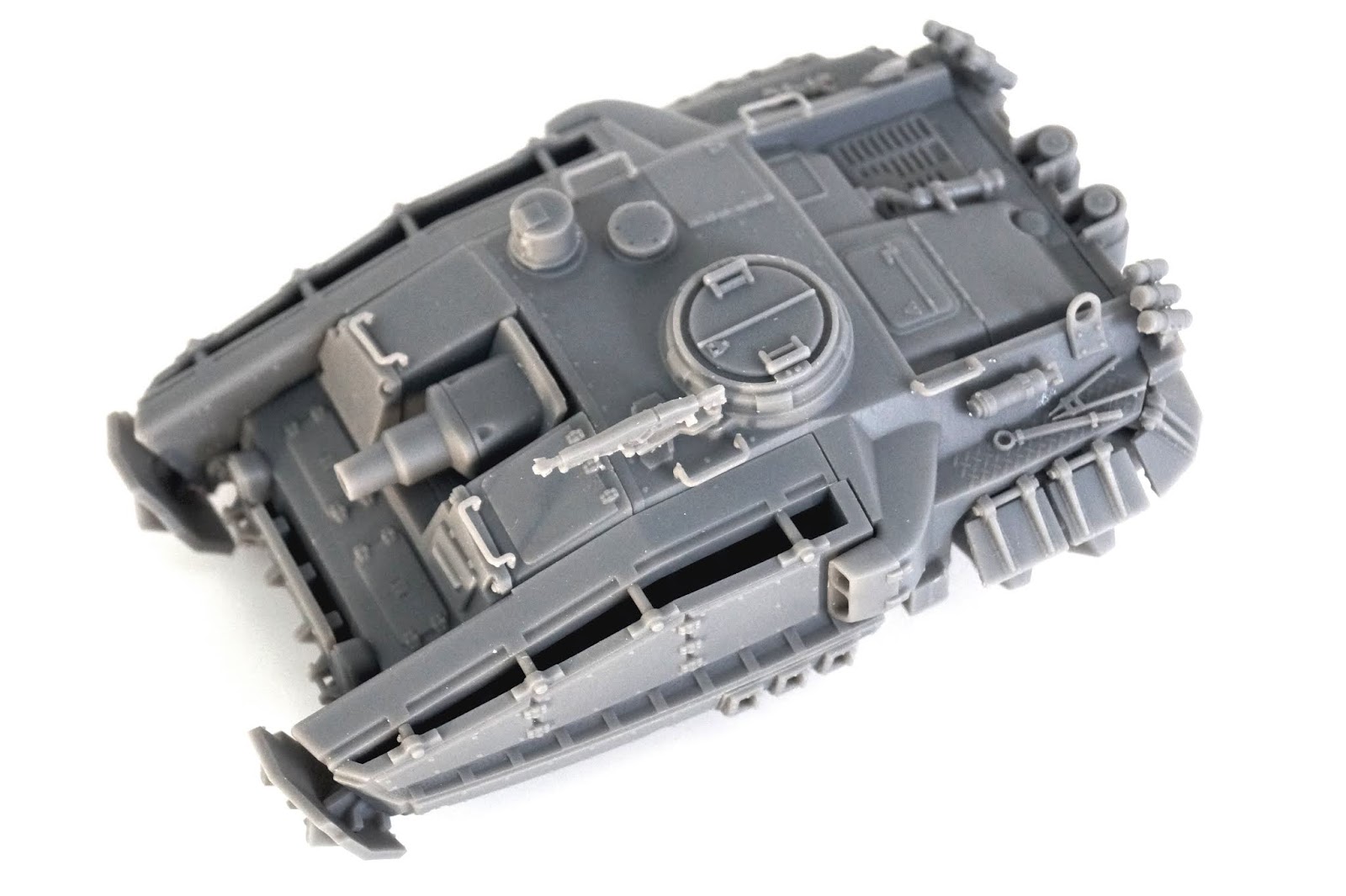
We have about a year's supply of product on hand and OOS items such as the Panzerjäger are on the water heading here now.
I have been working on the day to day business aspects, cost analysis, product restocks back end implementation issues, etc. so not a lot of glamorous items to give an updated on for that front.
We have two restock orders incoming from China, the cost has been educational. The cost of shipping is not just crazy expensive for my customers but for us as well. In some cases, it costs more to ship a product than it does to produce it, in other cases the cost to produce a kit was not in line with what it is being sold at into distribution. Some kits were being sold at a net loss once shipping was factored in. Unfortunately, this will mean a price increase, some kits will see a marginal increase, other will be a bit more drastic.
I will give a detailed SKU by SKU run down and explanation later this week.
We have two new SKU's that will be offered once they arrive. The 15mm scale Capacitor cooler and a 60mm tall display model of one of our Assault Troopers. We should have these in hand sometime next month. We are putting the final touches on the files for the Shadokesh main trooper box set. No eta on a release date yet for the Shadokesh, until they are on the water and heading here it is simply impractical to give an estimate.
WRC 8 FIA World Rally Championship CODEX Free Download
WRC 8 FIA World Rally Championship CODEX Free Download PC Game setup in single direct link for Windows. It is an amazing racing, simulation and sports game.
WRC 8 FIA World Rally Championship CODEX PC Game 2019 Overview
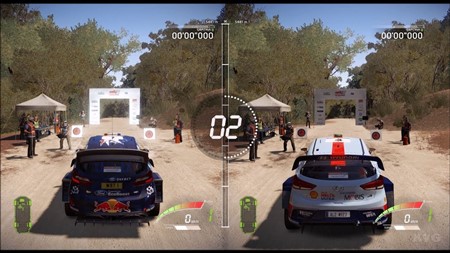
The WRC championship is the most difficult and unpredictable motorsport competition in the world. Drivers, co-drivers and technical staff have to constantly adapt to get the best from their cars and be the fastest on each surface, whatever the weather, both day and night. With the new dynamic weather system developed for WRC 8, rain, snow and hailstorms have a bigger impact, resulting in a much more true to life simulation. Road grip changes during the race, cars need to be tuned specifically for each special stage, tyre choices and stock management need to be considered, and making proper use of the weather team to get the best advice… The weather is much more than a visual effect – now it's finally coming into its own, adding a whole new dimension to the game. In solo mode take on the new challenges of a completely overhauled, more realistic career mode, designed in conjunction with WRC drivers: schedule and activity management between rallies, research and development to improve the car, recruitment and management of your staff (mechanics, engineers, medical and weather teams, financial director, communication manager, etc.). In multiplayer mode, weekly challenges and eSports WRC are back and the competition is more intense than ever. With 50 teams, 14 rallies and more than 100 special stages from the 2019 season, WRC 8 offers the most content ever in an off-road racing game. Rise to the challenge!
Technical Specifications of This Release.
Game Version : Initial Release
Interface Language: English
Audio Language : English
Uploader / Re packer Group: Codex
Game File Name : WRC_8_Fia_World_Rally_Championship_Codex.iso
Game Download Size : 22 GB
MD5SUM : c9fad47d7b3ed6328af4f7307bd9999e
System Requirements of WRC 8 FIA World Rally Championship CODEX
Before you start WRC 8 FIA World Rally Championship CODEX Free Download make sure your PC meets minimum system requirements.
Minimum:
* Requires a 64-bit processor and operating system * OS: Windows® 7 64bits * Processor: Intel Core i3-2100 or AMD FX-4350 * Memory: 6 GB RAM * Graphics: Nvidia GeForce GTX 650 2GB or ATI Radeon HD 5870 2GB * DirectX: Version 11 * Storage: 19 GB available space * Sound Card: DirectX Compatible Soundcard * Additional Notes: 64bit Only
Recommended:
* Requires a 64-bit processor and operating system * OS: Windows 10 64-bit * Processor: Intel Core i5-6600 or AMD Ryzen 5 1600 * Memory: 8 GB RAM * Graphics: Nvidia GeForce GTX 1060 3GB or Radeon RX 580 4GB * DirectX: Version 11 * Storage: 19 MB available space * Sound Card: DirectX Compatible Soundcard * Additional Notes: 64bit Only
WRC 8 FIA World Rally Championship CODEX Free Download
Click on the below button to start WRC 8 FIA World Rally Championship CODEX. It is full and complete game. Just download and start playing it. We have provided direct link full setup of the game.
If I ever do become a Twitch Partner (the likelihood is 0%) and you're more able to get
sponsorships, I would chose Planet Fitness as my first sponsor, given that my stream channel is focused on gaming, but also health issues. We streamers and gamers are notoriously known for poor self-care, so I'd love to promote Planet Fitness.
But is Planet Fitness the gym for you? The first thing to look for in a gym is proximity. If there's another fitness center that's within one mile of your work/home, and the Planet Fitness is further away, the better option is the closer one, in terms of achieving compliance.
I used to go to another gym that was 5 miles away, and I barely went, but my local Planet Fitness is less than 1 mile away, and I've been consistent in attending.
If you have young children, Planet Fitness does not offer babysitting so unless you're able to have someone to attend your children, Planet Fitness won't be a good option. I would chose a gym that has babysitting.
If you're a hardcore body builder and are entering competitions, Planet Fitness is not a good gym for you. I believe the dumb bells go up to 60 pounds, and there are no barbell and squat racks, only the dreadful Smith machines. However, if you're the average person, not aiming to be in competitions, Planet Fitness has more than adequate equipment. I like how they have the Step Mill, which is rotating staircases.
If Planet Fitness is close to you, you do not need babysitting for your children, and you're not looking to achieve a competitive ready physique, Planet Fitness is the perfect gym.
For one, it's open 24/7, meaning that there's no excuse to not go to the gym, improving compliance. I believe that's Planet Fitness's biggest selling point. Planet Fitness is a very clean and organized facility, and I found the staff and fellow members to be polite, courteous and friendly. Planet Fitness is affordable, and during the summer, there's an offer where initiation fee was either waived, or $10 (I don't recall which). Monthly membership is $10 for basic which gives you access to all equipment, including the many classes. $20 is the Black Rewards membership which gives you access to all Planet Fitness locations, guest pass for one (unlimited), and the awesome bed and chair water massage.
Even though I don't travel a lot, or have a consistent friend to go with me to the gym, I nevertheless splurged on the $20 membership because of the massage!
I appreciate the amenities, including built in lockers, so no more fumbling around for your lock, which I hate! If you forget the combination that you inputted, staff will open the locker.
In terms of equipment, I only ever use the Step Mill, but they have plenty of machines and exercise circuits for weight lifting. I use Your Body is Your Barbell system instead, as I'm looking to improve functional strength rather than aesthetics. The other nice feature of Planet Fitness is that in your account, it lists upcoming classes (some you can sign up for in advance electronically), and also which days you attended the gym so you can see your consistency and/or insurance purposes.
Lastly, Planet Fitness has that much touted 1st Monday Pizza and 2nd Tuesday Morning Bagel, but I never went to one, so I can't comment on the pizza or bagel, but it's a nice touch. All in all, Planet Fitness is affordable, convenient and accessible, improving exercise compliance. I find it's a perfect gym for most people's needs, and certainly for me! The How of Happiness Review
On the last day of the cold January Will from Extra Credits sat down to stream SOMA, and for the first few hours of the game he was joined by his friend and Frictional employee Ian Thomas. Ian worked on scripting, coding, and level design for SOMA, and is now the Story Lead on one of Frictional's two upcoming projects. During the stream he answered some questions from the viewers, ranging from what type of pizza he thinks Simon had in his fridge, to ways of minimising dissonance between the player and the character in a narrative game.
In this blog we've compiled the best questions and answers into an easily readable form. So go get a beverage of your choice and dive into the everyday life at Frictional, narrative game design and tips on networking in the industry! Or, if you're not the reading type, you can also watch the whole video on Twitch.
Have some other questions? Hit us up on Twitter and we will try to answer the best we can!
(Picture commentary from your favourite community manager/editor of this blog, Kira.)
Q: Does the Frictional team scare each other at the office?
We didn't have an office until recently, and even now most people are still remote, so not really!
The thing about being behind the scenes in horror is that it's very difficult to scare yourself, and each other, because you know what's going on. We do play each others' levels every other week, and it's always brilliant to get a decent scare out of a coworker.
Otherwise we don't hide in the office cupboards or anything like that… regularly.
Q: Is it true that developers don't actually play their games?
No - we play our games thousands of times, and most developers do!
It does depend on where you sit in the development chain. If you work for a very big company and only do something like facial models, you might rarely play the game until it's close to completion. But in a team the size of Frictional everyone plays the game all the time. That's how we get our primary feedback and develop our levels before the game goes anywhere near alpha testers.
Q: How about after they're released?
Probably not that often. For me personally there are two reasons, which both have to do with time. Firstly, I'm probably already working on a new thing. Secondly, during the short downtime after a release I'm trying to catch up on games I had to put aside during development. But it depends: for example, when I worked on LEGO games I would later play them with friends, because they're so much fun to sit down and co-op play.
For a couple of years after the release you might be fed up with your game and not want to see it, but then you might come back to it fresh. With SOMA I sometimes tune into livestreams, especially if I'm feeling down. That's one of the kicks you get out of this stuff – knowing which parts of the game people are going to react to, and getting to watch those reactions! That's the best payoff.
Q: Did the existential dread of SOMA ever get to the team?
It's a little different for the dev team, as the horror is a slow burn of months and months, whereas for the players it comes in a short burst. The philosophical questions affected people in different ways, but I don't think we broke anyone. As far as I know we're all fine, but given that a lot of us work remotely, it could well be that one of us is deep in Northern Sweden inscribing magical circles in his front room and we just don't know...
Q: Why did SOMA get a Safe Mode?
SOMA was originally released with monsters that could kill you, and that put off some people that were attracted to the themes, the sci-fi and the philosophy, because they saw the game as too scary or too difficult. Thomas and Jens had discussed a possible safe mode early on, but weren't sure it would work. However, after the game came out, someone in the community released the Wuss Mod that removed the monsters, and that and the general interest in the themes of the game made us rethink. So now we've released the official Safe Mode, where the monsters still attack you, but only if you provoke them – and even then they won't kill you.
You can now avoid one of these three death screens!
The concept of death in games is a strange one. All it really means is that you go back to a checkpoint, or reload, and all the tension that's built up goes away. The fact is that game death is pretty dull. It becomes much more interesting when it's a part of a mechanic or of the story. We at Frictional have talked about it internally for a while, but it's something we've never really gotten a satisfactory answer to.
So, all in all, even if you turn on Safe Mode, it's not that much different from playing the game normally.
Q: What type of pizza does Simon have in his fridge?
Meat lovers', definitely.
Schrödinger's pizza! And a Mexicana. Unless they mixed it up at the factory. In which case it's also a Schrödinger's pizza.
Q: What was the funniest or hardest bug to fix in SOMA?
There were so many! You can find some of the stuff in the supersecret.rar file that comes with the installation.
I spent a lot of time fixing David Munshi. His animation really didn't behave and he kept leaping around the place. He was so problematic, especially in this sequence where he was supposed to sit down in a chair and type away at the keyboard. We had so much trouble with that - what if the player had moved the chair? We couldn't lock it in place, because we want the player to be able to mess with these things. We went around trying to come up with an answer for ages.
And then someone on the team went: "Standing desk!". Problem solved! It's silly little things like this which tie up your time.
For all you thirsty Munshi lovers out there. You know who you are.
Another similar element was the Omnitool. It was a fairly major design thing that we came up with to connect the game characters, and to gate scenarios. We were struggling trying to tie these things together, and then it was just one of those days when someone came up with one single idea that solved so many problems. It was a massive design triumph – even if we realised later that the name was a bit Mass Effect!
Q: Why does using items and elements in Frictional's games mimic real movements?
This is one of Thomas's core design principles: making actions like opening doors and turning cranks feel like physical actions. It binds you more closely into the game and the character, on an unconscious level. We've spent an awful lot of time thinking about ways to collapse the player and the character into one and make the player feel like a part of the world. It's a subtle way of feedback that you don't really think about, but it makes you feel like you're "there".
There's an interesting difference between horror games and horror films in this sense. You would think that horror movies are scarier because you're dragged into the action that moves on rails and there's nothing you can do about it. But for me that kind of horror is actually less scary than the kind in games, where you have to be the person to push the stick forward.
We try to implement this feedback loop in other elements of the game too, like the sound design. When a character is scared it makes their heartbeat go up, which makes the player scared, which makes their heartbeat go up in turn, and so on.
Q: Why didn't SOMA reuse enemies?
It obviously would have been much cheaper to reuse the monsters. But in SOMA it was a clear design point, since each of the enemies in SOMA was trying to advance the plot, get across a particular point in the story, or raise a philosophical question. Thus, the enemies were appropriate to a particular space or a piece of plot and it didn't make sense to reuse them.
Q: Did SOMA start with a finished story, or did it change during development?
The story changed massively over the years. I came on to the game a couple of years into development, and at that time there were lots of fixed points and a general path, but still a lot changed around that. As the game developed, things got cut, they got reorganized, locations changed purpose, and some things just didn't work out.
Building a narrative game is an ever-changing process. With something like a platformer you can build one level, test the mechanics, then build a hundred more similar levels iterating on and expanding those core mechanics. Whereas in a game like this you might build one level in isolation, but that means you don't know what the character is feeling based on what they've previously experienced.
You don't really know if the story is going to work until you put several chapters together. That's why it's also very difficult to test until most of it is in place. Then it might suddenly not work, so you have to change, drop and add things. There's quite a lot of reworking in narrative games, just to make sure you get the feel right and that the story makes sense. You've probably heard the term "kill your darlings" – and that's exactly what we had to do.
A lot of the things were taken out before they were anywhere near complete – they were works in progress that were never polished. Thus these elements are not really "cut content", just rough concepts.
Q: The term "cut content" comes from film, and building a game is closer to architecture or sculpting. Would there be a better name for it?
A pile of leftover bricks in the corner!
Q: How do you construct narrative horror?
Thomas is constantly writing about how the player isn't playing the actual game, but a mental model they have constructed in their head. A lot of our work goes into trying to create that model in their head and not to break it.
A central idea in our storytelling is that there's more going on than the player is seeing. As a writer you need to leave gaps and leave out pieces, and let the player make their own mind up about what connects it all together.
You'll meet a tall, dark stranger...
From a horror point of view there's danger in over-specifying. Firstly having too many details makes the story too difficult to maintain. And secondly it makes the game lose a lot of its mystery. The more you show things like your monsters, the less scary they become. A classic example of this is the difference between Alien and Aliens. In Alien you just see flashes of the creatures and it freaks you out. In Aliens you see more of them, and it becomes less about fear and more about shooting. It's best to sketch things out and leave it up to the player's imagination to fill in the blanks – because the player's imagination is the best graphics card we have!
There are a lot of references that the superfans have been able to put together. But there are one or two questions that even we as a team don't necessarily know the answers to.
Q: How do you keep track of all the story elements?
During the production of SOMA there was an awful lot of timeline stuff going on. Here we have to thank our Mikael Hedberg, Mike, who was the main writer. He was the one to make sure that all of the pieces of content were held together and consistent across the game. A lot of the things got rewritten because major historical timelines changed too, but Mike kept it together.
During the development we had this weird narrative element we call the double apocalypse. At one point in writing most of the Earth was dead already because of a nuclear war, and then an asteroid hit and destroyed what was left. We went back and forth on that and it became clear that a double apocalypse would be way over the top and coincidental. So we edited the script to what it is now, but this has resulted in the internal term 'that sounds like a double apocalypse', which is when our scripts have become just a bit too unbelievable or coincidental.
Q: How do you convey backstories, lore, and world-building?
Obviously there are clichés like audio logs and walls of text, but there is a trend to do something different with them, or explaining the universe in a different way. But the fundamental problem is relaying a bunch of information to the player, and the further the world is from your everyday 21st century setting, the more you have to explain and the harder it is. So it's understandable that a lot of games do it in the obvious way. The best way I've seen exposition done is by working it into the environment and art, making it part of the world so that the player can discover it rather than shoving it into the player's face.
Q: How do you hook someone who disagrees with the character?
It's hard to get the character to say and feel the same things as what the player is feeling. If you do it wrong it breaks the connection between the player and the character, and makes it far less intense. Ideally, if the player is thinking something, you want the character to be able to echo it. We spend a lot of time taking lines out so the character doesn't say something out of place or contrary to what the player feels.
With philosophical questions there are fixed messages you can make and things you can say about the world, but that will put off a part of the audience. The big thing when setting moral questions or decisions is that you should ask the question instead of giving the answer. If you offer the players a grey area to explore, they might even change their minds about the issue at hand.
To murder or not to murder, that is the question.
Q: How do you write for people who are not scared of a particular monster or setting?
In my experience the trick is to pack as many different types of fear in the game as you can, and picking the phobias that will affect the most people. If there's only one type of horror, it's not going to catch a wide enough audience. Also, if you only put in, say, snakes, anyone who isn't afraid of snakes is going to find it dull.
We probably peaked in our first game. What's worse than spiders? (Not representative of the company's opinion.)
Q: What's the main thing you want to get across in games?
The key thing is that the players have something they will remember when they walk away from the game, or when they talk about it with other people. It's different for different games, and as a developer you decide on the effect and how you want to deliver it. In games like Left 4 Dead delivery might be more about the mechanical design. In other games it's a particular story moment or question.
In SOMA the goal was not to just scare the players as they're looking at the screen, it was about the horror that they would think about after they put the mouse or controller down and were laid in bed thinking about what they'd seen. It was about hitting deeper themes. Sure, we wrapped it in horror, but the real horror was, in a way, outside the game.
Q: What does SOMA stand for?
It has many interpretations, but I think the one Thomas and Mike were going for was the Greek word for body. The game is all about the physicality of the body and its interaction with what could be called the spirit, mind, or soul – the embodiment of you.
The funniest coincidence was when we went to GDC to show the game off to journalists before the official announcement. We hadn't realised there is a district in San Francisco called Soma, so we were sitting in a bar called Soma, in the Soma district, about to announce Soma!
As to why it's spelled in all caps – it happened to look better when David designed the logo!
Q: Does this broken glass look like a monster face on purpose?
I'm pretty sure it's not on purpose – it's just because humans are programmed to see faces all over the place, like socket plugs. It's called pareidolia. But it's something you can exploit - you can trick people into thinking they've seen a monster!
This window is out to get you!
Q: What is the best way to network with the industry people?
Go to industry events, and the bar hangouts afterwards!
It's critical, though, not to treat it as "networking". Let's just call it talking to people, in a room full of people who like the same stuff as you. It's not about throwing your business cards at each other, it's about talking to them and finding common interests. Then maybe a year or two down the line, if you got on, they might remember you and your special skills or interests and contact you. Me being on Will's stream started with us just chatting. And conversations I had in bars five years ago have turned into projects this year.
You have to be good at what you do, but like in most industries, it's really about the people you know. I'm a bit of an introvert myself, so I know it's scary. But once you realise that everybody in the room is probably as scared as you, and that you're all geeks who like the same stuff, it gets easier. Another good way to make connections is attending game jams. If you haven't taken part in one, go find the nearest one! Go out, help your team, and if you're any good at what you do, people will be working with you soon.
Q: Can you give us some fun facts?
Sure!
- You can blame the "Massive Recoil" DVD in Simon's room on our artist, David. A lot of the things in Simon's apartment are actually real things David has.
- We try to be authentic with our games, but out Finnish sound guy Tapio Liukkonen takes it really far. We have sequences of him diving into a frozen lake with a computer keyboard to get authentic underwater keyboard noises. It's ridiculous.
- Explaining SOMA to the voice actors was challenging – especially to this 65-year-old British thespian, clearly a theatre guy. Watching Mike explain the story to him made me think that the whole situation was silly and the guy wasn't getting the story at all. And then he went into the studio and completely nailed the role.
- There's a lot of game development in Scandinavia, particularly in Sweden and Norway, because it's dark and cold all the time so people just stay indoors and make games. Just kidding… or am I?